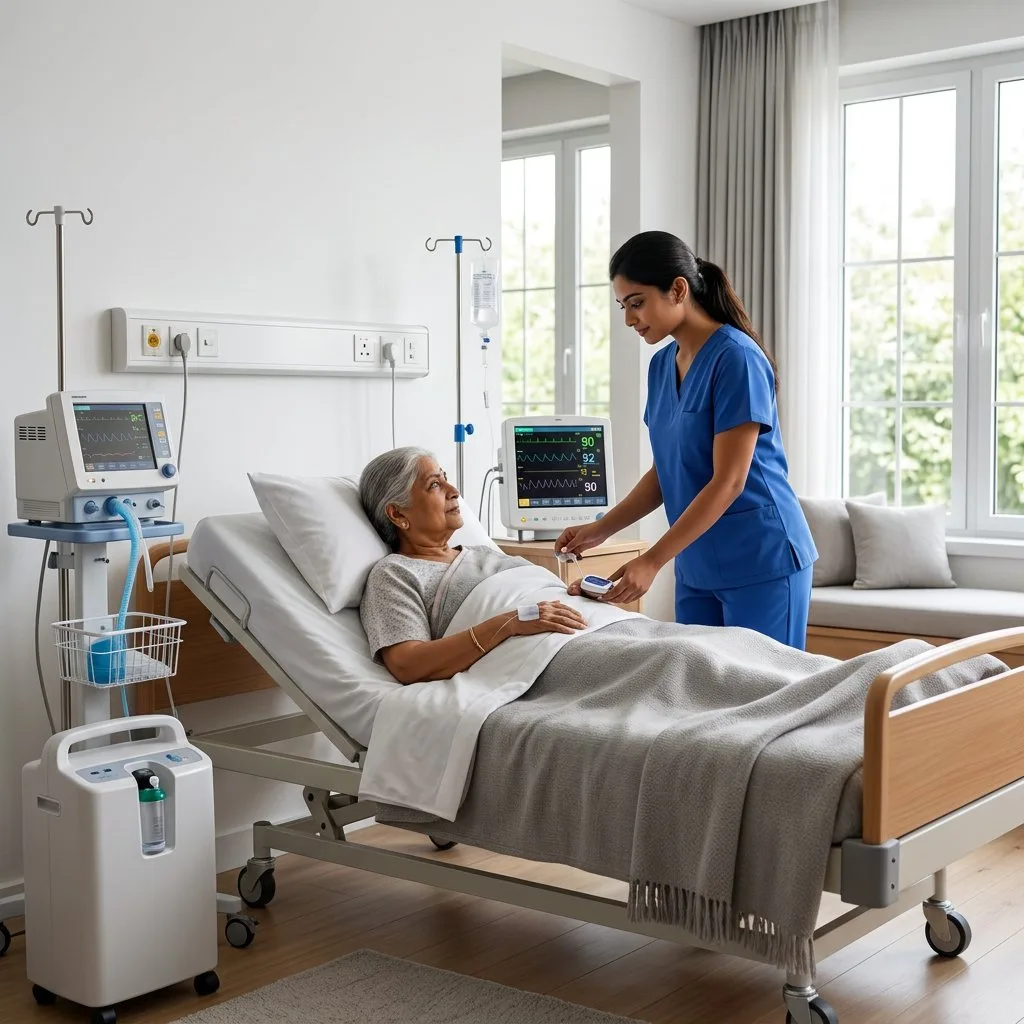
Trusted Home Healthcare in Bangalore

Category

Home Nursing Services in Jayanagar

Professional Home Nursing Services services available in Jayanagar (560011).

What kind of care do you need?

Home Nursing Services

Catheter Care

Medca Healthcare provides catheter care at home in Bangalore by registered nurses trained in Foley catheter insertion, drainage bag management, sterile perineal care, blockage troubleshooting, and CAUTI prevention — with

  • 15+ years combined home healthcare experience
  • Background-verified clinical staff

Medca Healthcare provides clinical catheter care at home in Bangalore delivered by GNM and B.Sc qualified nurses trained in urinary catheter management. Indwelling Foley catheters require sterile technique for insertion, secure fixation, drainage bag maintenance, and early infection detection — procedures that untrained caregivers must never attempt.

Catheter-associated urinary tract infections (CAUTI) are among the most common healthcare-associated infections. Proper closed-drainage system maintenance, perineal hygiene, and timely catheter changes significantly reduce this risk. Medca nurses follow evidence-based protocols, document urine characteristics, and escalate to the treating urologist when blockage, leakage, or infection signs appear.

Catheter care is part of our home nursing services. Related services include general nursing care, bedridden patient support, and wound care for patients with coexisting pressure injuries.

Procedures included

  • Sterile Foley catheter insertion and removal per physician order
  • Closed drainage bag management below bladder level at all times
  • Daily perineal cleaning and catheter securement check
  • Urine output measurement and colour or clarity documentation
  • Balloon inflation verification and catheter patency flushing when ordered
  • Scheduled catheter change at urologist-recommended intervals

Specialized care

  • Post-TURP and urological surgery catheter management
  • Neurogenic bladder in spinal cord injury patients
  • Elderly male BPH with chronic indwelling catheter
  • Suprapubic catheter care and site dressing
  • Paediatric-adjacent adult caregiving with catheter-dependent seniors
  • Palliative catheter care focused on comfort and hygiene

Service timing

  • Scheduled nursing visits for catheter change and assessment
  • Daily visit protocols for high-risk or post-operative catheter patients
  • Continuous nursing shifts when catheter management combines with other clinical needs
  • On-call nursing response for blockage or leakage emergencies

Frequently asked questions

Who performs catheter insertion at home?
Only GNM or B.Sc registered nurses perform catheter insertion and removal. Caregivers never perform this procedure.
How often should a Foley catheter be changed?
Typically every 4–6 weeks or per urologist recommendation. Medca schedules changes to prevent encrustation and infection.
What are signs of catheter-associated UTI?
Cloudy or foul-smelling urine, fever, suprapubic pain, confusion in elderly patients, and blood in the drainage bag.

Home Nursing Services

ICU Care At Home

Medca Healthcare provides ICU care at home in Bangalore with critical care-trained nurses managing ventilators, cardiac monitors, infusion pumps, tracheostomy, and multi-organ support — including 24/7 nursing shifts, equ

  • 15+ years combined home healthcare experience
  • Background-verified clinical staff

Medca Healthcare delivers hospital-grade ICU care at home in Bangalore for patients who require intensive monitoring and clinical intervention but benefit from the reduced infection risk, family presence, and cost efficiency of home-based critical care. Our critical care-trained nurses manage ventilators, multi-parameter monitors, infusion pumps, and complex medication regimens in a structured home ICU setup.

Home ICU is not a downgrade from hospital care — it is a deliberate clinical decision when the patient has passed the acute instability phase but still needs intensive nursing coverage. Medca coordinates equipment, nursing shift rotations, physician oversight, and emergency escalation protocols to maintain the same vigilance expected in a hospital ICU bed.

ICU-at-home is the apex of our home nursing services. It integrates with ventilator care, tracheostomy care, IV infusion, and wound care as a unified critical care package.

Procedures included

  • Ventilator parameter monitoring and alarm response
  • Continuous SpO2, ECG, blood pressure, and respiratory rate tracking
  • IV infusion pump management for vasoactive and sedative medications
  • Tracheostomy suctioning and airway care per critical care protocol
  • Strict fluid balance charting and output monitoring
  • Pressure area care and repositioning for ventilated immobile patients

Specialized care

  • Ventilator-dependent respiratory failure at home
  • Post-sepsis multi-organ recovery with intensive monitoring
  • Neuro-ICU step-down with tracheostomy and sedation weaning
  • Post-cardiac surgery ICU transition to home
  • Chronic ventilator patients seeking long-term home management
  • Paediatric-adult transition care for young adults with complex needs

Service timing

  • 8-hour or 12-hour critical care nursing shift rotations 24/7
  • Dedicated day and night ICU nurse teams with structured handover
  • On-call intensivist or physician teleconsultation support
  • Biomedical technician on-call for equipment emergencies

Frequently asked questions

Is home ICU as safe as hospital ICU?
When properly set up with critical care nurses, equipment, physician oversight, and emergency protocols, home ICU can be safe for step-down patients cleared by their intensivist.
What equipment is needed for home ICU?
Typically ventilator, multi-parameter monitor, infusion pumps, suction, oxygen source, UPS backup, and hospital bed — Medca coordinates procurement.
Who decides if a patient is ready for home ICU?
The treating intensivist or physician makes the clinical clearance decision based on stability and home feasibility.

Home Nursing Services

IV Infusion Services

Medca Healthcare provides IV infusion services at home in Bangalore including IV antibiotics, hydration fluids, iron infusion, biologics, and pump-controlled therapy — administered by registered nurses with aseptic techn

  • 15+ years combined home healthcare experience
  • Background-verified clinical staff

Medca Healthcare provides professional IV infusion services at home in Bangalore administered by registered nurses trained in venous access, infusion pump operation, and adverse reaction monitoring. IV therapy at home reduces hospital exposure, preserves patient comfort, and maintains treatment continuity for antibiotics, hydration, iron sucrose, biologics, and supportive oncology infusions ordered by physicians.

Every IV infusion carries risks — extravasation, phlebitis, anaphylaxis, and line infection. Medca nurses assess vein suitability, maintain aseptic technique during cannulation, monitor infusion rates precisely, and remain with the patient during the critical first minutes when reactions most commonly occur. Used supplies are disposed of through biomedical waste protocols.

IV infusion is a core home nursing service. It integrates with injection services, general nursing care, and ICU-at-home for patients requiring continuous pump-controlled therapy.

Procedures included

  • Peripheral or central line cannulation with aseptic technique
  • Infusion rate calculation and pump programming verification
  • Pre-infusion vital signs and allergy history confirmation
  • Continuous patient monitoring during infusion for reactions
  • Post-infusion observation period before nurse departure
  • Phlebitis and extravasation assessment at cannulation site

Specialized care

  • Multi-day IV antibiotic courses post-hospital discharge
  • IV iron sucrose for refractory anaemia
  • Biologic infusions for IBD and rheumatological conditions
  • Oncology supportive IV therapy between chemotherapy cycles
  • IV hydration for elderly dehydration management
  • PICC line and central line infusion management

Service timing

  • Scheduled single-visit infusions for one-time doses
  • Daily visit courses for 5–14 day IV antibiotic regimens
  • Extended infusion visits for pump-controlled multi-hour therapies
  • Combined nursing shifts when infusion accompanies other clinical care

Frequently asked questions

Who administers IV infusions at home?
Only GNM or B.Sc registered nurses with IV therapy training administer home infusions. Caregivers never perform this procedure.
Can all IV antibiotics be given at home?
Many can, with physician approval. High-risk infusions or first doses of new drugs may require hospital administration initially.
How long does a home IV infusion visit take?
Typically 30 minutes to 4 hours depending on the drug, volume, and required observation period after completion.

Home Nursing Services

Injection Services

Medca Healthcare provides injection services at home in Bangalore by registered nurses for insulin, anticoagulants, IM antibiotics, vitamin injections, hormonal therapy, and post-surgical analgesics — with correct techni

  • 15+ years combined home healthcare experience
  • Background-verified clinical staff

Medca Healthcare provides reliable injection services at home in Bangalore for intramuscular, subcutaneous, and intradermal medications prescribed by physicians. From insulin and anticoagulants to post-surgical analgesics, vitamin B12, and hormonal therapies, our registered nurses administer injections with correct technique, anatomical site rotation, and proper sharps disposal.

Incorrect injection technique causes lipodystrophy, abscess formation, nerve injury, and medication non-absorption. Medca nurses verify the prescription, check allergy history, use appropriate needle gauge and length for the route, rotate injection sites systematically, and monitor for immediate adverse reactions before leaving the patient.

Injection services are part of our home nursing services. Patients needing intravenous therapy should use IV infusion services, while those requiring only medication reminders without injection administration may use general nursing care or caregiver support.

Procedures included

  • Prescription and dose verification against physician order
  • Anatomical site selection with rotation map documentation
  • Aseptic skin preparation and correct needle gauge selection
  • IM injection into deltoid, ventrogluteal, or vastus lateralis as appropriate
  • SC injection with skin pinch technique for anticoagulants and insulin
  • Post-injection observation for immediate reaction or haematoma

Specialized care

  • Insulin therapy for Type 1 and Type 2 diabetes
  • Post-hip and knee replacement enoxaparin prophylaxis
  • IM antibiotic courses when IV access is unavailable
  • Testosterone replacement SC or IM therapy
  • Fertility protocol gonadotropin injections
  • Rheumatology biologic SC injections — adalimumab, etanercept

Service timing

  • Single-visit injections for one-time or weekly doses
  • Daily morning visits for insulin and anticoagulant regimens
  • Cycle-timed visits for fertility hormonal protocols
  • Combined visits when injection accompanies wound care or other nursing tasks

Frequently asked questions

Can caregivers give insulin injections?
No. Insulin and all parenteral injections must be administered by registered nurses unless a family member is formally trained and authorized by the physician.
How often do injection nurses visit?
Frequency matches the prescription — daily for insulin, once daily for enoxaparin, or cycle-timed for fertility hormones.
Do nurses bring needles and syringes?
Yes. Nurses carry sterile single-use syringes and needles appropriate for each injection route and medication viscosity.

Home Nursing Services

Mother & Baby Care

Medca Healthcare provides mother and baby care at home in Bangalore including newborn bathing, umbilical cord care, breastfeeding support, maternal postnatal recovery assistance, jaundice observation, and caesarean wound

  • 15+ years combined home healthcare experience
  • Background-verified clinical staff

Medca Healthcare offers gentle mother and baby care at home in Bangalore supporting new mothers and their newborns during the critical first weeks after childbirth. The postnatal period brings sleep deprivation, breastfeeding challenges, episiotomy or caesarean wound recovery, and newborn care anxiety — our trained nurses and experienced maternity attendants provide evidence-based support in the comfort of home.

Early postnatal nursing identifies newborn jaundice, feeding difficulties, maternal infection signs, and postpartum mood changes before they escalate. Medca supports both vaginal and caesarean recoveries with wound observation, breastfeeding positioning, umbilical cord care, and maternal rest facilitation so the family bonds without clinical uncertainty.

Mother and baby care is part of our home nursing services. Caesarean wound dressing needs may combine with wound care, while mothers needing only rest support may also explore general nursing care options.

Procedures included

  • Newborn sponge bathing and umbilical cord stump care
  • Breastfeeding positioning, latch assessment, and feeding duration tracking
  • Newborn weight monitoring and intake-output documentation
  • Visual jaundice assessment and escalation for bilirubin testing when indicated
  • Caesarean wound dressing observation and sterile dressing changes when ordered
  • Maternal perineal care and episiotomy site hygiene for vaginal deliveries

Specialized care

  • First-time mother and newborn dyad support
  • Caesarean section postnatal recovery at home
  • Twin newborn care with enhanced feeding and monitoring schedules
  • Late preterm newborn observation during first two weeks
  • Breastfeeding re-establishment after initial difficulty or formula transition
  • Postpartum maternal anaemia and nutritional recovery support

Service timing

  • Day shifts for feeding support and newborn care during waking hours
  • Night shifts allowing mothers 6–8 hours of uninterrupted sleep
  • 24-hour live-in maternity support for the first 15–40 days postpartum
  • Short-term 1–2 week intensive support for caesarean recovery

Frequently asked questions

What is included in mother and baby home care?
Newborn bathing, cord care, feeding support, jaundice observation, maternal recovery assistance, and breastfeeding guidance.
Can I hire a night nurse so I can sleep?
Yes. Night shifts are our most requested postnatal service, typically 8 PM to 6 AM with full newborn care coverage.
Do you support caesarean section recovery?
Yes. Nurses monitor the surgical wound, assist with mobility, and support feeding positions that protect the incision.

Home Nursing Services

Nursing Care At Home

Medca Healthcare provides nursing care at home in Bangalore with GNM and B.Sc qualified nurses for vital monitoring, medication administration, clinical assessment, post-hospital recovery, chronic disease management, and

  • 15+ years combined home healthcare experience
  • Background-verified clinical staff

Medca Healthcare provides comprehensive nursing care at home in Bangalore through GNM and B.Sc qualified registered nurses who deliver clinical healthcare services beyond what caregivers can legally or safely perform. General home nursing covers vital monitoring, medication administration, clinical assessment, care coordination, and integration of specialized procedures across the recovery continuum.

Home nursing bridges hospital and independence — maintaining clinical vigilance during recovery while allowing patients the comfort and infection-control advantages of home. Medca nurses document clinical observations, communicate with treating physicians, and coordinate specialized services such as wound care, IV therapy, and catheter management within a unified care plan.

General nursing is the foundation of our home nursing services category. Specialized needs route to wound care, injections, ICU-at-home, or caregiver services when clinical intensity decreases.

Procedures included

  • Comprehensive vital sign assessment — BP, pulse, SpO2, temperature, respiratory rate
  • Oral and topical medication administration per physician order
  • Clinical assessment of neurological status, skin integrity, and hydration
  • Blood glucose monitoring and insulin coordination with injection services
  • Physician report preparation with trend documentation
  • Care plan coordination across wound care, IV, catheter, and injection services

Specialized care

  • Post-medical admission recovery with multi-organ monitoring
  • Congestive heart failure home management with daily weight and vitals
  • COPD home management with SpO2 monitoring and nebulization support
  • Diabetes management with glucose monitoring and complication screening
  • Elderly multi-morbidity with integrated nursing oversight
  • Pre-caregiver-transition clinical stabilization after hospital discharge

Service timing

  • Single scheduled nursing visits for assessment and medication administration
  • Daily visit protocols for post-hospital recovery monitoring
  • 12-hour nursing shifts for patients needing continuous clinical oversight
  • 24/7 nursing coverage for complex multi-procedure home care

Frequently asked questions

Are Medca home nurses actually qualified?
Yes. We deploy GNM and B.Sc registered nurses with verified credentials. We do not label caregivers as nurses.
What is the difference between a home nurse and a caregiver?
Nurses perform clinical procedures — medication administration, wound care, IV therapy, clinical assessment. Caregivers provide daily living support under nursing supervision.
Can I hire a nurse for just a few visits after hospital discharge?
Yes. Short-term visit plans for post-discharge monitoring are common before transitioning to caregiver-only support.

Home Nursing Services

PEG Tube Care

Medca Healthcare provides PEG tube care at home in Bangalore including stoma site hygiene, enteral formula administration, tube flushing, medication delivery, blockage management, and infection monitoring — by registered

  • 15+ years combined home healthcare experience
  • Background-verified clinical staff

Medca Healthcare provides specialist PEG tube care at home in Bangalore for patients receiving long-term enteral nutrition through percutaneous endoscopic gastrostomy tubes. PEG feeding supports individuals with dysphagia from stroke, neurological disease, head and neck cancer, or critical illness who cannot safely consume adequate nutrition orally.

PEG tubes require meticulous stoma site care, correct feeding formula administration, flush protocols preventing blockage, and early detection of infection, granulation tissue, or tube displacement. Medca nurses manage the complete enteral feeding cycle — bolus and continuous pump feeds, medication administration through the tube, and stoma assessment at every visit.

PEG tube care is part of our home nursing services. Patients transitioning from Ryles tube feeding or needing combined wound care receive integrated nursing plans rather than fragmented single-procedure visits.

Procedures included

  • Stoma site cleaning and dressing with rotation of fixation devices
  • Enteral formula preparation and administration — bolus or pump feeds
  • Pre and post-feed flushing with sterile water per protocol
  • Medication crushing and liquid administration through PEG tube
  • Residual volume checking when ordered by physician or dietitian
  • Stoma assessment for infection, granulation, and bumper position

Specialized care

  • Post-stroke PEG placement with concurrent rehabilitation nursing
  • ALS progressive dysphagia with long-term enteral nutrition
  • Head and neck cancer PEG during and after oncological treatment
  • Elderly failure-to-thrive with physician-ordered PEG nutrition
  • Transition from Ryles nasogastric tube to permanent PEG
  • Combined PEG care with tracheostomy management in ventilated patients

Service timing

  • Scheduled feeding visits for bolus feed regimens — 4–6 times daily
  • Continuous pump feed management with extended nursing shifts
  • Daily stoma care visits combined with feeding administration
  • 24/7 nursing when PEG combines with ICU-at-home or tracheostomy care

Frequently asked questions

Who manages PEG feeding at home?
Registered nurses trained in enteral nutrition and gastrostomy care. Caregivers may assist with positioning under nurse direction but do not administer feeds independently without training.
How often do PEG nursing visits occur?
Typically 4–6 times daily for bolus feeds, or continuous pump management with extended nursing shifts for complex cases.
What happens if the PEG tube falls out?
Cover the stoma immediately and contact Medca. The tract begins closing within hours — urgent gastroenterology or nurse replacement is needed.

Home Nursing Services

Post Surgical Nursing Care

Medca Healthcare provides post-surgical nursing care at home in Bangalore including sterile wound dressing, drain management, suture line monitoring, DVT prophylaxis support, pain assessment, and mobilization guidance —

  • 15+ years combined home healthcare experience
  • Background-verified clinical staff

Medca Healthcare delivers clinical post-surgical nursing care at home in Bangalore for patients recovering from orthopaedic, abdominal, cardiac, neurosurgical, and oncological procedures. Surgical recovery at home requires sterile wound management, drain monitoring, DVT prophylaxis support, and early complication detection — tasks that demand registered nursing expertise.

Hospital stays are shortening globally, pushing complex post-operative care into home settings before patients are fully recovered. Medca post-surgical nurses implement surgeon-specific protocols for dressing changes, suture or staple line assessment, JP drain output monitoring, and mobilization guidance that prevents both deconditioning and surgical site compromise.

Post-surgical nursing is a specialist service within home nursing services. It pairs with wound care for complex wounds, injection services for anticoagulant prophylaxis, and post-hospitalization caregiver support as clinical needs decrease.

Procedures included

  • Sterile surgical wound dressing change per surgeon protocol
  • Suture or staple line assessment for dehiscence, erythema, or discharge
  • JP drain output measurement, character documentation, and removal coordination
  • Subcutaneous anticoagulant injection for DVT prophylaxis when ordered
  • Pain score assessment using validated scale with physician reporting
  • Calf circumference and Homan's sign monitoring for DVT detection

Specialized care

  • Total hip and knee replacement post-operative nursing
  • Spinal surgery wound care and mobilization restriction compliance
  • CABG sternotomy wound monitoring and cardiac recovery nursing
  • Abdominal surgery with multiple drain management
  • Oncological mastectomy and axillary drain care
  • Emergency trauma orthopaedic fixation recovery nursing

Service timing

  • Daily wound dressing visits during the first 1–2 post-operative weeks
  • Twice-daily visits when drain output monitoring requires frequent assessment
  • 12-hour nursing shifts for complex multi-drain abdominal surgery recovery
  • Tapering visit frequency as wound healing progresses toward caregiver transition

Frequently asked questions

How soon after surgery can home nursing begin?
Often on the day of or day after hospital discharge. Medca coordinates with your surgeon's discharge plan.
Do nurses follow our surgeon's specific protocol?
Yes. We work from your surgeon's written discharge instructions, not generic protocols.
How often are wound dressings changed at home?
Frequency depends on the surgery — typically daily to every 48 hours for the first 1–2 weeks, per surgeon order.

Home Nursing Services

Ryles Tube Care

Medca Healthcare provides Ryles tube care at home in Bangalore including nasogastric insertion, placement verification, enteral feeding administration, tube flushing, nare care, and displacement monitoring — by registere

  • 15+ years combined home healthcare experience
  • Background-verified clinical staff

Medca Healthcare provides clinical Ryles tube care at home in Bangalore for patients requiring nasogastric feeding and gastric decompression through NG tubes. Ryles tube management demands registered nursing skill — correct insertion depth verification, pH-confirmed placement, feeding formula administration, and patency maintenance cannot be delegated to caregivers.

Incorrect NG tube placement is a life-threatening error causing pulmonary aspiration. Medca nurses confirm placement before every feed using pH testing or physician-prescribed verification methods, administer feeds with proper positioning, maintain nare and tape securement, and monitor for displacement, blockage, and nasal mucosal injury during the tube's duration.

Ryles tube care is part of our home nursing services. Long-term feeding needs often transition to PEG tube care, while concurrent stroke recovery support addresses the underlying dysphagia driving tube dependence.

Procedures included

  • Nasogastric tube insertion with depth measurement and radiological or pH confirmation
  • Pre-feed pH aspiration and placement verification per protocol
  • Bolus or continuous enteral formula administration with rate control
  • Pre and post-feed flushing with sterile water maintaining patency
  • Nare skin assessment and tape securement rotation preventing pressure injury
  • Residual volume assessment when ordered before subsequent feeds

Specialized care

  • Acute post-stroke NG feeding during dysphagia recovery window
  • Bridge nutrition pending PEG placement scheduling
  • Elderly delirium patients with temporary feeding incapacity
  • Post-head injury enteral nutrition during consciousness recovery
  • Oncology patients with temporary swallowing impairment during treatment
  • Combined Ryles tube care with tracheostomy management in ICU-at-home patients

Service timing

  • Multi-daily feeding visits aligned with prescribed bolus feed schedule
  • Extended nursing shifts for continuous pump feeding regimens
  • Emergency visit response for tube displacement or blockage
  • Combined shift coverage when NG feeding accompanies other clinical nursing needs

Frequently asked questions

Can caregivers give Ryles tube feeds?
No. NG tube feeding requires registered nurses who verify placement before every feed. Caregivers may assist with positioning only under nurse direction.
How is NG tube placement confirmed before feeding?
Our nurses use pH testing of aspirated gastric contents and follow physician-prescribed verification protocols before every feeding episode.
How long can a Ryles tube stay in?
NG tubes are typically temporary — 2–6 weeks. Longer needs usually warrant transition to PEG for safety and patient comfort.

Home Nursing Services

Tracheostomy Care

Medca Healthcare provides tracheostomy care at home in Bangalore including sterile suctioning, stoma site hygiene, inner cannula management, humidification, emergency airway response, and tube change coordination — by re

  • 15+ years combined home healthcare experience
  • Background-verified clinical staff

Medca Healthcare provides specialist tracheostomy care at home in Bangalore for patients with artificial airways requiring ongoing suctioning, stoma hygiene, inner cannula management, and emergency airway response. Tracheostomy patients depend entirely on skilled nursing for airway patency — a blocked or dislodged tracheostomy tube can be fatal within minutes.

Home tracheostomy care extends hospital-level airway management into the community for patients with prolonged ventilator weaning, neurological conditions, or upper airway obstruction. Medca nurses maintain sterile suction technique, monitor secretions for infection indicators, perform scheduled inner cannula cleaning, and coordinate tube changes with the treating ENT or intensivist team.

Tracheostomy care integrates with our home nursing services and typically combines with ventilator care and ICU-at-home for ventilator-dependent patients requiring comprehensive critical airway management.

Procedures included

  • Sterile closed and open suctioning per secretion assessment schedule
  • Inner cannula removal, cleaning, and reinsertion with sterile technique
  • Stoma site cleaning and dressing with granulation tissue management
  • Humidification system maintenance — heated wire circuits or HME filters
  • Cuff pressure monitoring and adjustment when cuffed tubes are in situ
  • Tracheostomy tube change at physician-scheduled intervals

Specialized care

  • Ventilator-dependent tracheostomy with integrated ICU-at-home nursing
  • Progressive weaning from ventilation with decannulation planning
  • Neurological tracheostomy — stroke, ALS, TBI long-term airway management
  • Paediatric-adult transition tracheostomy care for young adults
  • Head and neck cancer tracheostomy with complex stoma anatomy
  • Non-ventilated tracheostomy with secretion management needs

Service timing

  • 8-hour and 12-hour nursing shifts for continuous airway management
  • 24/7 coverage for ventilator-dependent tracheostomy patients
  • Scheduled visit protocols for stable non-ventilated tracheostomy patients
  • Emergency on-call nursing response for airway obstruction events

Frequently asked questions

Who can perform tracheostomy suctioning at home?
Registered nurses trained in airway management. Family members may assist only after formal emergency training by our nurses — not as primary suction providers.
Is tracheostomy care always combined with ventilator care?
Not always. Some patients have tracheostomy without ventilator dependence. Care intensity depends on secretion volume and weaning status.
How often is tracheostomy suctioning needed?
Varies from every 1–4 hours based on secretion volume. Nurses assess and suction on clinical indication, not rigid schedules alone.

Home Nursing Services

Ventilator Care At Home

Medca Healthcare provides ventilator care at home in Bangalore with critical care-trained nurses managing invasive and non-invasive ventilation, alarm response, humidification, tracheostomy integration, weaning protocols

  • 15+ years combined home healthcare experience
  • Background-verified clinical staff

Medca Healthcare delivers expert ventilator care at home in Bangalore for patients requiring ongoing mechanical ventilation, non-invasive BiPAP or CPAP support, or progressive weaning from hospital ventilator dependence. Home ventilation reduces hospital-acquired infection exposure, enables family participation, and significantly reduces the cost of prolonged ICU stays for chronically ventilator-dependent patients.

Ventilator management is among the most technically demanding home nursing specialties. Medca critical care nurses monitor ventilator parameters, respond to alarm conditions, manage humidification circuits, coordinate tracheostomy airway care, and execute physician-directed weaning protocols while maintaining emergency escalation readiness at all times.

Ventilator care is a cornerstone of our home nursing services, integrated with tracheostomy care, ICU-at-home, and enteral feeding in comprehensive critical care packages.

Procedures included

  • Ventilator parameter monitoring — mode, FiO2, PEEP, tidal volume, respiratory rate
  • Alarm assessment and response — high pressure, low pressure, apnea, disconnect
  • Humidification circuit management and HME filter replacement
  • Integrated tracheostomy suctioning and airway care during ventilator support
  • ABG trend coordination and SpO2 continuous monitoring documentation
  • Physician-directed weaning trials with spontaneous breathing assessment

Specialized care

  • ALS home ventilation with progressive disease management
  • Post-ICU prolonged ventilator weaning at home
  • Paediatric-adult transition ventilator care for young adults with congenital conditions
  • COPD home BiPAP with nursing compliance and monitoring support
  • Tracheostomy-ventilator integrated care in ICU-at-home packages
  • Nocturnal BiPAP for obesity hypoventilation and severe OSA

Service timing

  • 8-hour and 12-hour critical care nursing rotations 24/7 for invasive ventilation
  • Night BiPAP supervision shifts for compliance-dependent non-invasive ventilation
  • Weaning trial shifts with extended nurse presence during SBT periods
  • On-call biomedical and nursing emergency response for equipment alarms

Frequently asked questions

Can ventilator patients live at home safely?
Yes, with critical care nurses, proper equipment, power backup, physician oversight, and emergency protocols — for patients cleared by their intensivist.
What ventilator modes can be managed at home?
Most stable modes — AC, SIMV, PSV, BiPAP — can be managed home with ICU-trained nurses following physician orders.
How much does home ventilator care cost compared to ICU?
Home care is typically significantly less expensive for prolonged ventilator dependence, though equipment rental and 24/7 nursing remain substantial investments.

Home Nursing Services

Wound Care & Dressing

Medca Healthcare provides wound care and dressing at home in Bangalore by registered nurses for surgical wounds, pressure ulcers, diabetic foot ulcers, and chronic wounds — using sterile technique, advanced dressings, in

  • 15+ years combined home healthcare experience
  • Background-verified clinical staff

Medca Healthcare provides clinical wound care and dressing at home in Bangalore delivered by registered nurses trained in wound assessment, sterile dressing technique, debridement coordination, and infection monitoring. From post-surgical incisions to chronic diabetic foot ulcers and pressure injuries, proper wound management determines whether healing progresses or complications develop.

Wounds are not all managed the same way — dressing selection depends on wound bed appearance, exudate level, infection status, and healing phase. Medca nurses assess wounds systematically using TIME principles (Tissue, Infection, Moisture, Edge), select appropriate advanced dressings, document healing progression photographically when permitted, and escalate to wound care physicians when healing stalls.

Wound care is a specialist service within home nursing services. It integrates with post-surgical nursing, bedridden patient care, and home nursing for comprehensive recovery support.

Procedures included

  • Wound assessment — size, depth, bed appearance, exudate, odour, surrounding skin
  • Sterile dressing change using aseptic no-touch technique
  • Advanced dressing application — hydrocolloid, alginate, foam, silver, NPWT when ordered
  • Wound bed preparation and autolytic debridement support
  • Pressure ulcer staging and repositioning schedule coordination with caregivers
  • Infection swab collection when clinical signs warrant culture

Specialized care

  • Post-orthopaedic and post-cardiac surgical wound management
  • Stage II–IV pressure ulcer treatment with repositioning integration
  • Diabetic foot ulcer offloading and dressing protocols
  • Venous leg ulcer compression and exudate management
  • Oncological wound and fungating tumour palliative dressing
  • Traumatic wound management during home recovery

Service timing

  • Daily dressing visits for heavily exudating or infected wounds
  • Every 48–72 hour visits for stable healing surgical wounds
  • Combined nursing shifts when wound care integrates with other clinical needs
  • Emergency visit response for sudden wound dehiscence or haemorrhage

Frequently asked questions

Who should perform wound dressing changes at home?
Registered nurses trained in wound care and sterile technique. Caregivers must not perform sterile dressing changes on open wounds.
How often are wound dressings changed?
Depends on wound type and exudate — daily for infected or heavily draining wounds, every 48–72 hours for stable healing surgical wounds.
Can pressure ulcers heal at home?
Stage I–II often heal with nursing care and repositioning. Stage III–IV requires intensive nursing, sometimes NPWT, and physician oversight.

Areas We Serve

areas

No areas match your search. Try another pincode or area name.

Local FAQ

Do you serve Jayanagar?
Yes — Jayanagar is within our primary service map.
Do you offer elder care in Jayanagar?
Yes — shift and live-in options after assessment.